Showing posts with label Native American Garden. Show all posts

Tuesday, February 13, 2018

Ms. Palo's Class Study Native Plants at School

Marquez School 4th graders are learning about social studies by way of native plants. Recently Ms. Palo's 4th graders met at the native garden at the north end of the school patio. There we discussed some of the plants that have been planted there-manzanita, deer grass, toyon, California sagebrush and monkey flower.  All of these plants were and are used by local Native Americans. The students also looked at white sage and Cleveland sage plants that we'll plant another day.

These plants can be found in the Santa Monica Mountains just a couple of miles away.

The Native Americans used the native plants for food, medicine and other daily uses. Here are just a few of there uses. Manzanita and toyon branches were used to make arrow shafts. Deer grass is woven into baskets. The leaves of California sagebrush and the monkey flower were used as medicine. Toyon was also used as medicine and food. White sage leaves are dried and then used in ceremonies. Cleveland sage leaves are used for medicine and food.

These plants are also drought tolerant and many of them attract our local pollinators.

California Sagebrush

Smudge stick made from white sage


Friday, December 1, 2017

What Marquez 4th graders Do and Learn in the Native American Garden?

The Native American Garden is an example of linking gardening to the curriculum as a way to make lasting memories for the students. In this case, we provide links to social studies and science and to our local flora of the Santa Monica mountain area.

The garden was installed in the 2014-15 school year based on a design by Ryan Drnek of Sodder Studios after approval by LAUSD personnel. Initial funding for the garden was from a grant from the Pacific Palisades Garden Club. Subsequent funding has come from Gibson International Realty.

We discuss how many of the plants in the garden can be found in the local mountains, just five minutes from school. Some of the students hike there and recognize the plants. Others use some of the plants at home, for example, white sage.

We discuss how native plants don't need much water, i.e. that they are drought tolerant and adapted to our climate. In the local mountains the plants self-seed and don't get extra water.

Many of the plants in the front garden are California native plants that were and are used by local indigenous peoples, the Chumash and Tongva, for food, medicine and other purposes.   The plants include deer grass, Cleveland sage, California poppy, black sage, purple sage, sticky monkey flower, island alum root, milkweed, white sage, hummingbird sage, sagebrush and yarrow.

In the fall, the students learn about California poppies, the state flower, as they plant the seeds in the garden. Later they can harvest and save the seeds.  We also discuss the role of mulch at this time and if necessary, add more mulch. Mulch keeps the soil underneath moist and reduces the need for watering. It also prevents weeds from growing.

In the winter, the students learn about other plants in the garden either as they plant them or as we observe them. Deer grass is an easy one to learn as it's the biggest plant in the garden. Students learn that the Chumash make baskets from this. They learn that there are several varieties of sages and that they smell good.

In the spring the California poppies, the state flower, explode with color!


California poppies in bloom

A smudge stick used for ceremonies is made from white sage


Students research and prepare reports on the different plants. During this process they learn how they are used by local pollinators as well as by indigenous peoples. During the spring annual garden celebration they tour the garden to the guests. The guests are given copies of the student's reports.

Identifying markers label the plants so community members can learn about them as well. This next year we will be purchasing identifying labels, similar to those in botanical gardens, that have QR codes that will link to explanations written by the children.

The attachments below show some pages from an iBook written by students in Ms. Chaides' class in spring of 2017. A printed copy was given to the attendees at the celebration.

In addition, reports from Ms. Chaides' and Ms. Palos' students from the garden dedication in spring of 2015 can be found on  Palisades Cares.


Thursday, February 2, 2017

Ms. Chaides' 4th Graders Plant in the Native American Garden

Today Ms. Chaides' 4th graders learned about ethnobotany and planted in the Marquez Native American Garden. Ethnobotany is the study of how humans use plants. In our case we are studying how Native people used and still use some of the native plants around them for medicine, food and utensils or tools.  One of the students acted as scribe and took notes in the class garden notebook.

Today the students added some plants to the garden which was planted a couple of years ago as well as weeded the area. Thanks to Carol Bornstein, Director of the Nature Garden at the Natural History Museum and Nancy Cipes, sustainable landscaper, for helping get the plants.

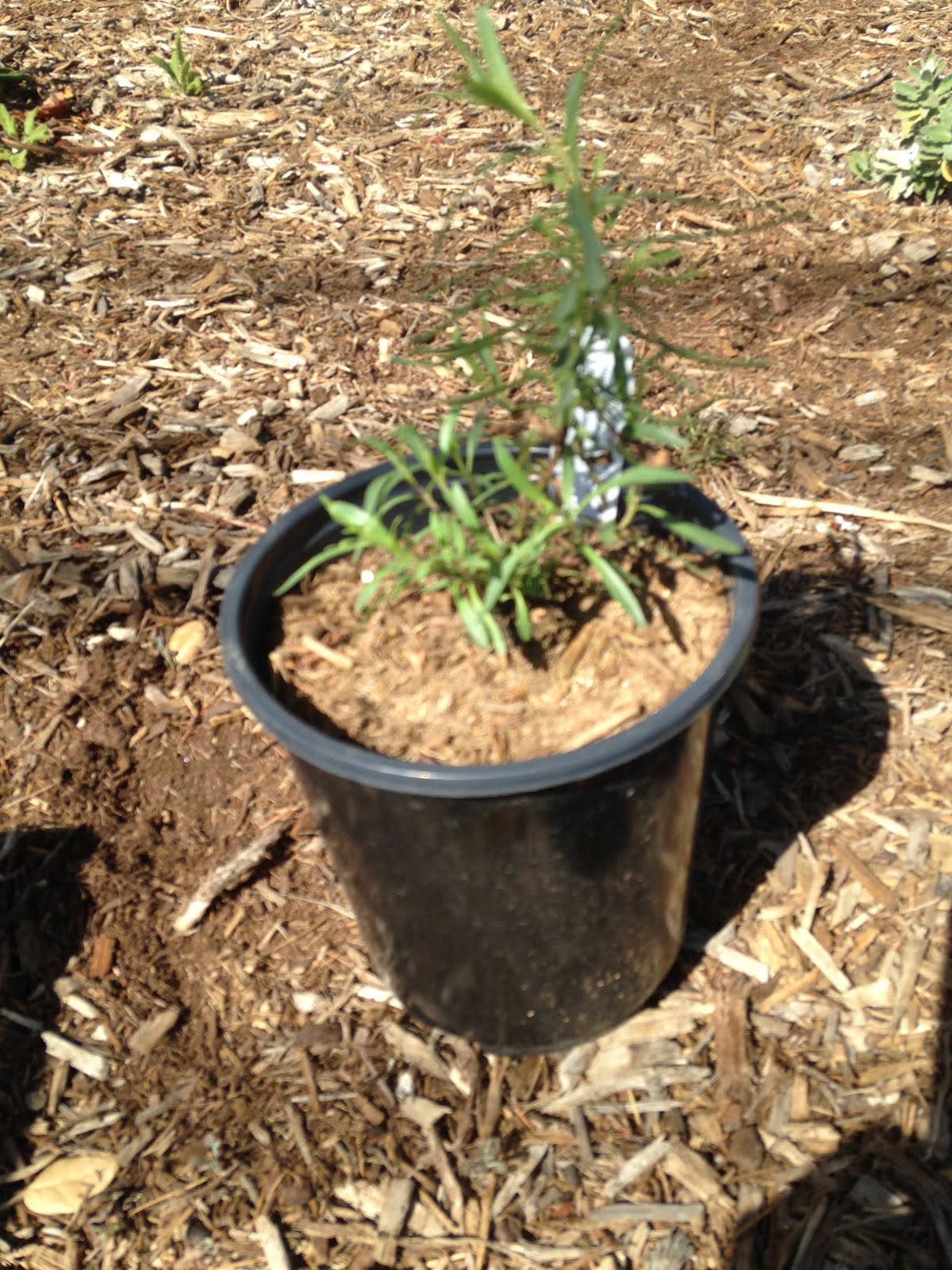
The plants which were planted include: monkeyflower, black sage, purple sage, manzanita and deer grass. They joined the existing garden of monkeyflower, milkweed, California poppy, alum root, California Sagebrush, Cleveland sage and ceanothus.  There are many poppy seedlings growing that were sowed by Ms. Palo's class. In a couple of months the area will be full of the orange flowers of this our state flower. We also have white sage and an oak tree elsewhere on the campus. We'll add the white sage to this area soon.

This spring the students will learn some of the uses of the plants by people and by wildlife.   They are also learning the importance of mulch. Most of the areas are mulched and the dirt was easier to dig in because the soil was more moist. An easy one to remember is deer grass which native people weave into baskets. Also, sages, which are in the mint family, are used for tea.

Thanks to Sharon Agraba for helping plant.

Weeding

Weeding

Planting deer grass

Wednesday, December 14, 2016

Ms. Palo's Students Plant in the Native American Garden

On December 9 Ms. Palo's 4th graders learned about some native plants and planted in the Native American Garden.  They planted California poppy seeds and narrow leaf milkweed. We discussed how the Tongva and Chumash used acorns, deer grass and California poppies. Acorns were ground and made into a paste, deer grass was woven into baskets and the roots of poppies were used to relieve toothaches.  The California poppy is our state flower. Narrow leaf milkweed is a California native plant and monarch butterflies lay their eggs on the plant.

The students also learned that there are common names and botanical names for plants. For example, the coast live oak is the common name and the botanical name is Quercus agrifolia. The botanical name is Latin.

We also discussed what mulch is and how it is used.  The mulch in the Native American Garden keeps weeds from growing and also helps conserve moisture so we don't need to water so often.