Early December in the Garden
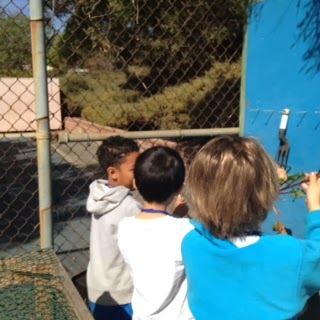
The second graders are continuing to learn and to work hard in the garden. The last two weeks they learned about composting, continued to hunt for grubs, weeded and planted some seeds in seed trays. Some of the seeds which they planted earlier in the ground and in seed trays have germinated.
We used "Kids Can Compost" by Wenchia Parker as a resource. I have two copies if anyone wants to borrow them. The book is also available online at kidscancompost.com. The kids learned that compost contains greens and browns and that it's food for the soil. Compost needs: greens, browns, air, heat and water. Greens are fruits, vegetables, bread, rice, pasta, coffee grounds and tea leaves. Browns are leaves, newspaper, paper towels, wood chips, grass clippings and cardboard pieces. We have a small compost container in the garden and will continue to have the kids compost by tearing the greens and browns in small pieces.
We are almost ready to plant in two more beds that have been "degrubbed" by the kids. The grubs would eat the roots of the plants, thus we need to remove them. They are being fed to Sara Houghton's chickens.
Tips for those who took home some seeds: cover the container with plastic to keep the seeds warmer and keep them moist. When the seeds germinate, i.e. you can see the green stems and leaves appear, take off the plastic.
This is what they did, in their own words: Jake: We dug up the dirt to find grubs; Alexandra: My friends and I made compost; Elula: We broke things into small pieces. We planted round carrots. Angie: We dug up dirt to find grubs and we pulled out roots. Others: We planted lettuce. We planted arugula.
We are keeping the garden open at recess as much as possible. We post a sign-in sheet at the gate. On Wednesday, 55 kids came to the garden between the two recesses! We are open for kids of any grades and have had several first, third and fourth graders visit.
Plans for the garden include: transplanting seedlings into the ground; working on the butterfly garden in the center circle. (We have planted butterfly bushes and milkweed. The first graders will plant wildflower seeds there soon); red trumpet vines along the fence bordering Marquez Avenue; planting of all the remaining beds with cool season vegetables and herbs; creating a birdbath; composting in a worm bin; and shortening the wooden supports for the bed covers. We plan to expand to other grades after the winter break.
Note to parents: it's not too late to plant lettuce and radish seeds at home with your young gardeners. You can plant in the ground, in containers or in small pots by your kitchen window.
Some good books to read with the kids:
Kids Can Compost;
Roots, Shoots, Buckets and Boots;
Rah, Rah, Radish.
Sara and I welcome volunteer parents to help with the kids, to help water over vacation, and do some manual chores e.g. shortening of bed supports.
The kids are very enthusiastic workers!