They also wrote about their favorite vegetables in their journals and enjoyed a salad with lettuce, tomatoes, carrots, corn and blueberries.
A blog about the garden based learning that's happening at Marquez Charter School in Pacific Palisades, CA.
Friday, February 17, 2017
Ms. Schwartz's 3rd Graders Plant Seeds
Thursday Ms. Schwartz's 3rd graders planted seeds that they'll grow under grow lights in their classroom. They planted tomatoes, peppers, corn, zucchini and spinach. Corn and zucchini are two of the vegetables in the Three Sisters Garden that they'll learn about and plant later this spring. They made holes in the soil with a pencil after checking how deep to plant the seeds. We are using the Compact Tabletop Sunlight Garden from Gardeners Supply Company in this and other classes to get our seeds to grow quickly. When the seedlings have three leaves we'll transplant them into a raised bed in the edible garden.
They also wrote about their favorite vegetables in their journals and enjoyed a salad with lettuce, tomatoes, carrots, corn and blueberries.
Tuesday, February 14, 2017
Ms. Bihari's Class Plants Seeds
Two weeks ago, Mrs. Bihari's class learned about "Eating a Rainbow." We discussed how different colored vegetables (and fruits) supply different important vitamins to our bodies. Then we planted radishes, carrots, kale, rainbow swiss chard, purple lettuce, and beets to make our own rainbow of vegetables. We planted half of the seeds under the indoor Grow Light and half directly into their garden bed. The class made a hypothesis that the seeds would grow equally well in both environments, but so far, most of the indoor seedlings are sprouting, and only three seedlings outside have sprouted. Hopefully the rain will help! When the seedlings have three sets of leaves, the students will transfer their seedlings to the garden bed near their classroom. They will first harden them off to get them used to being outside.
| These are the seeds after two weeks! |
Thursday, February 2, 2017
Ms. Chaides' 4th Graders Plant in the Native American Garden
Today Ms. Chaides' 4th graders learned about ethnobotany and planted in the Marquez Native American Garden. Ethnobotany is the study of how humans use plants. In our case we are studying how Native people used and still use some of the native plants around them for medicine, food and utensils or tools. One of the students acted as scribe and took notes in the class garden notebook.
Today the students added some plants to the garden which was planted a couple of years ago as well as weeded the area. Thanks to Carol Bornstein, Director of the Nature Garden at the Natural History Museum and Nancy Cipes, sustainable landscaper, for helping get the plants.
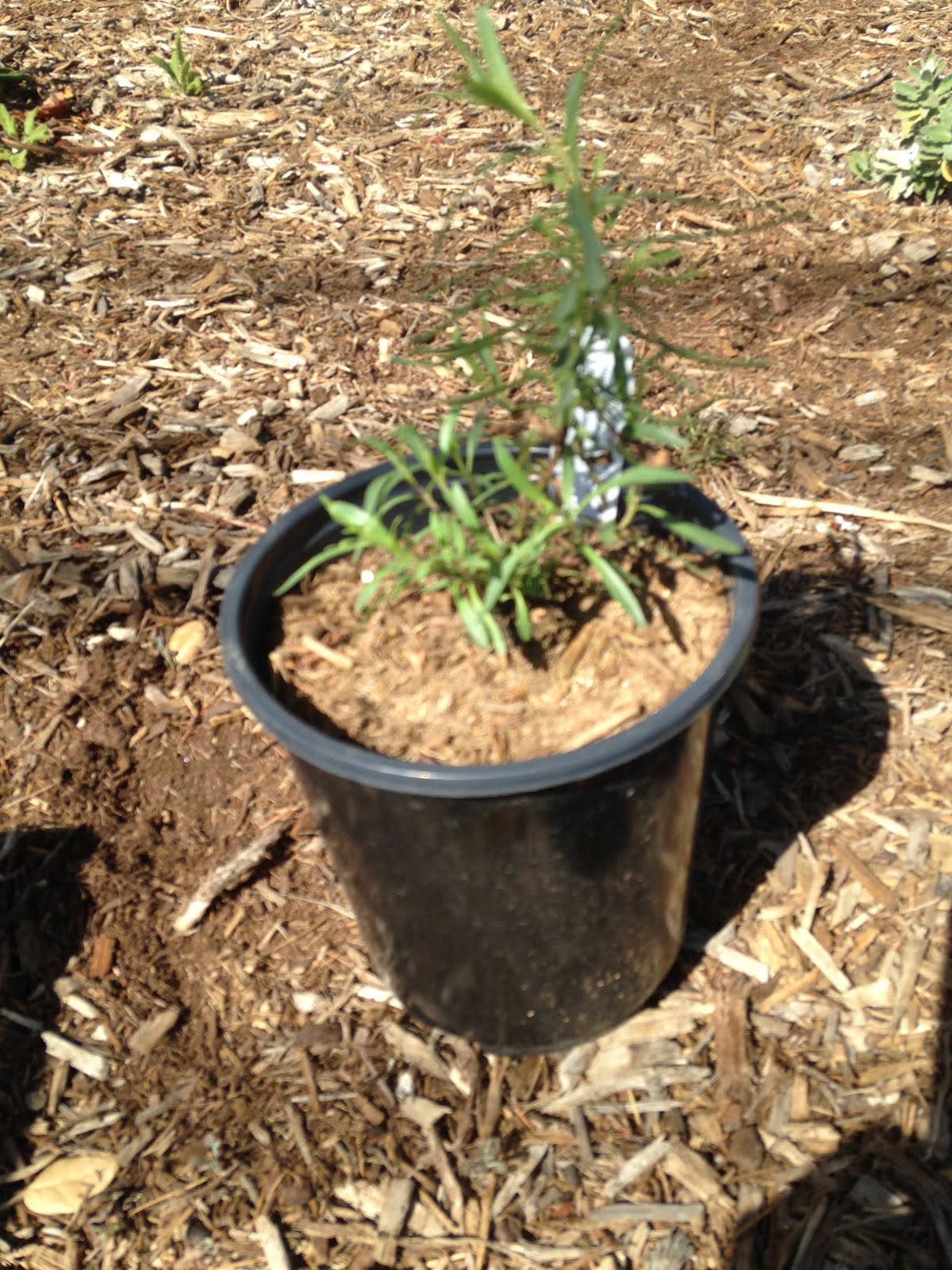
The plants which were planted include: monkeyflower, black sage, purple sage, manzanita and deer grass. They joined the existing garden of monkeyflower, milkweed, California poppy, alum root, California Sagebrush, Cleveland sage and ceanothus. There are many poppy seedlings growing that were sowed by Ms. Palo's class. In a couple of months the area will be full of the orange flowers of this our state flower. We also have white sage and an oak tree elsewhere on the campus. We'll add the white sage to this area soon.
This spring the students will learn some of the uses of the plants by people and by wildlife. They are also learning the importance of mulch. Most of the areas are mulched and the dirt was easier to dig in because the soil was more moist. An easy one to remember is deer grass which native people weave into baskets. Also, sages, which are in the mint family, are used for tea.
Thanks to Sharon Agraba for helping plant.
Today the students added some plants to the garden which was planted a couple of years ago as well as weeded the area. Thanks to Carol Bornstein, Director of the Nature Garden at the Natural History Museum and Nancy Cipes, sustainable landscaper, for helping get the plants.
The plants which were planted include: monkeyflower, black sage, purple sage, manzanita and deer grass. They joined the existing garden of monkeyflower, milkweed, California poppy, alum root, California Sagebrush, Cleveland sage and ceanothus. There are many poppy seedlings growing that were sowed by Ms. Palo's class. In a couple of months the area will be full of the orange flowers of this our state flower. We also have white sage and an oak tree elsewhere on the campus. We'll add the white sage to this area soon.
This spring the students will learn some of the uses of the plants by people and by wildlife. They are also learning the importance of mulch. Most of the areas are mulched and the dirt was easier to dig in because the soil was more moist. An easy one to remember is deer grass which native people weave into baskets. Also, sages, which are in the mint family, are used for tea.
Thanks to Sharon Agraba for helping plant.
![]() |
| Weeding |
![]() |
| Weeding |
![]() |
| Planting deer grass |
Wednesday, December 14, 2016
Gardening and Eating in Ms. Farrell's Class
Mrs. Farrell's 3rd grade class has been growing seedlings under a Grow Light in their classroom since October. The Grow Light was purchased using funds from last year's Whole Kids Foundation grant. This week the children planted the seedlings in their upper garden bed. They planted carrots, beets, radishes, and two kinds of kale (one is called dinosaur kale!). While one half of the class planted, the other group practiced their writing skills by composing 1-2 paragraph summaries describing the 2 month process. After the hard work was done, the children enjoyed eating colorful carrots, radishes, and delicious male chips, made by Molly Sigworth. Thanks to Laurie Vander Veen for coordinating!


Ms. Connor's Class and Ms. Yoshida's Class Eat a Rainbow
On December 12, 2nd graders in Ms. Connor's class and Ms. Yoshida's class learned about eating a rainbow. It's important to eat a rainbow of fruits and vegetables because we get vitamins and nutrients from them. They help prevent disease. https://www.hsph.harvard.edu/nutritionsource/what-should-you-eat/vegetables-and-fruits/ We started by drawing a rainbow on the white board and labeling the colors. The students then helped fill in the fruits and vegetables that went with the colors. Along the way I gave occasional hints such as, we eat the root of this plant, it's red and it's not a carrot. The children generated most names for the green section.
The children wrote in their garden journals while I made a smoothie that used foods from most of the colors. The journal page was titled Eating a Rainbow. They wrote the names of some of the fruits and veggies in the rainbow. Some also copied the smoothie recipe, which was adapted from the Whole Kids Foundation.
Here is some more information in case you want to make your own smoothies at home: https://www.wholekidsfoundation.org/filewrapper/?filename=https://www.wholekidsfoundation.org/downloads/kids-club/better-bites-smoothie-solutions.pdf. It's fun to pick fruits and veggies and see how they go together!
The smoothie recipe that we used:
1 c. spinach
1 c. vanilla yogurt
1/2 c. orange juice
1/2 c. apple juice
1/2 c. raspberries
1/2 c. blueberries
1 persimmon
1 banana
The children wrote in their garden journals while I made a smoothie that used foods from most of the colors. The journal page was titled Eating a Rainbow. They wrote the names of some of the fruits and veggies in the rainbow. Some also copied the smoothie recipe, which was adapted from the Whole Kids Foundation.
Here is some more information in case you want to make your own smoothies at home: https://www.wholekidsfoundation.org/filewrapper/?filename=https://www.wholekidsfoundation.org/downloads/kids-club/better-bites-smoothie-solutions.pdf. It's fun to pick fruits and veggies and see how they go together!
The smoothie recipe that we used:
1 c. spinach
1 c. vanilla yogurt
1/2 c. orange juice
1/2 c. apple juice
1/2 c. raspberries
1/2 c. blueberries
1 persimmon
1 banana
Ms. Palo's Students Plant in the Native American Garden
On December 9 Ms. Palo's 4th graders learned about some native plants and planted in the Native American Garden. They planted California poppy seeds and narrow leaf milkweed. We discussed how the Tongva and Chumash used acorns, deer grass and California poppies. Acorns were ground and made into a paste, deer grass was woven into baskets and the roots of poppies were used to relieve toothaches. The California poppy is our state flower. Narrow leaf milkweed is a California native plant and monarch butterflies lay their eggs on the plant.
The students also learned that there are common names and botanical names for plants. For example, the coast live oak is the common name and the botanical name is Quercus agrifolia. The botanical name is Latin.
We also discussed what mulch is and how it is used. The mulch in the Native American Garden keeps weeds from growing and also helps conserve moisture so we don't need to water so often.
The students also learned that there are common names and botanical names for plants. For example, the coast live oak is the common name and the botanical name is Quercus agrifolia. The botanical name is Latin.
We also discussed what mulch is and how it is used. The mulch in the Native American Garden keeps weeds from growing and also helps conserve moisture so we don't need to water so often.
Thursday, December 1, 2016
Ms. Conn's Class Saves Seeds
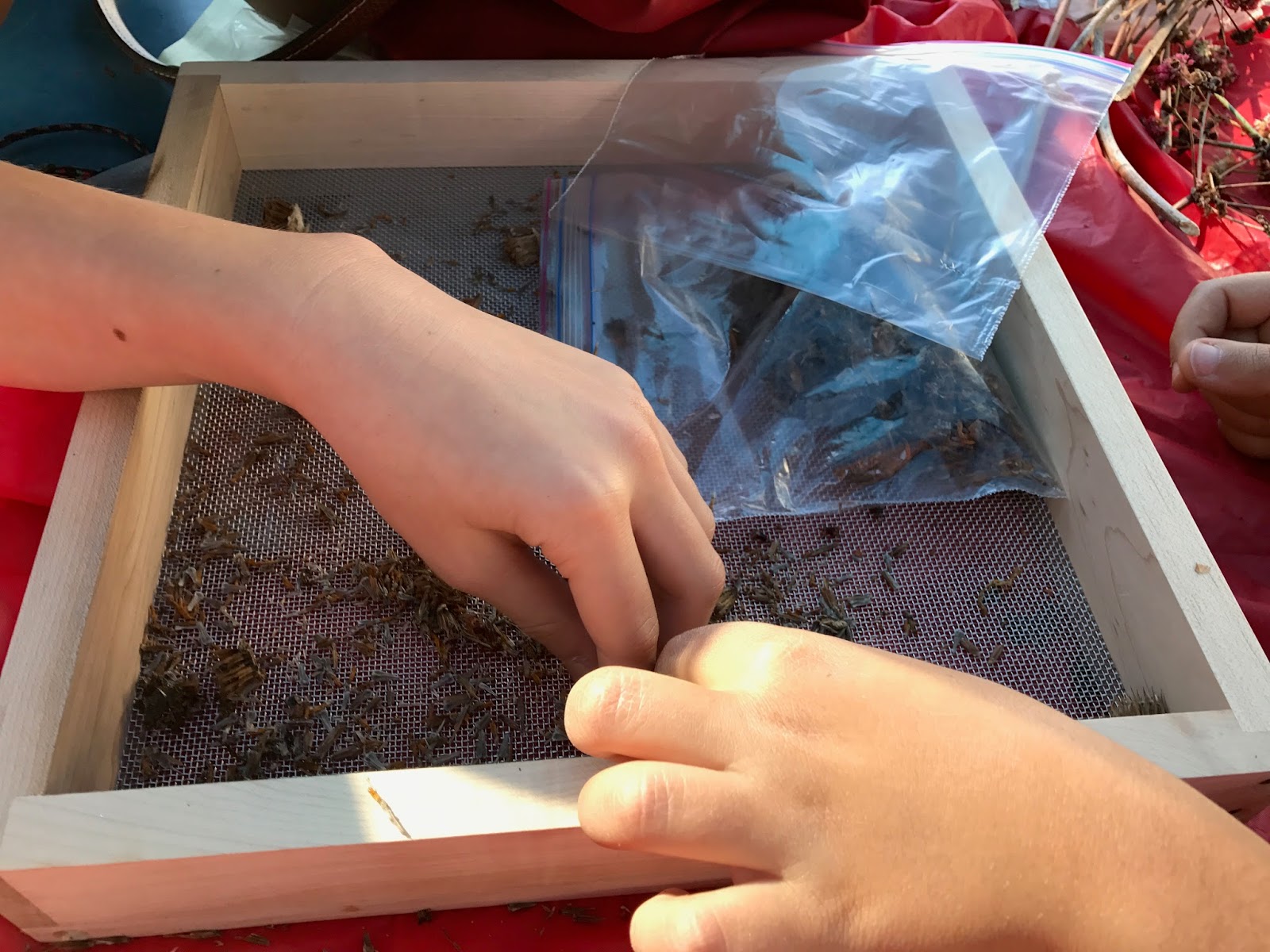
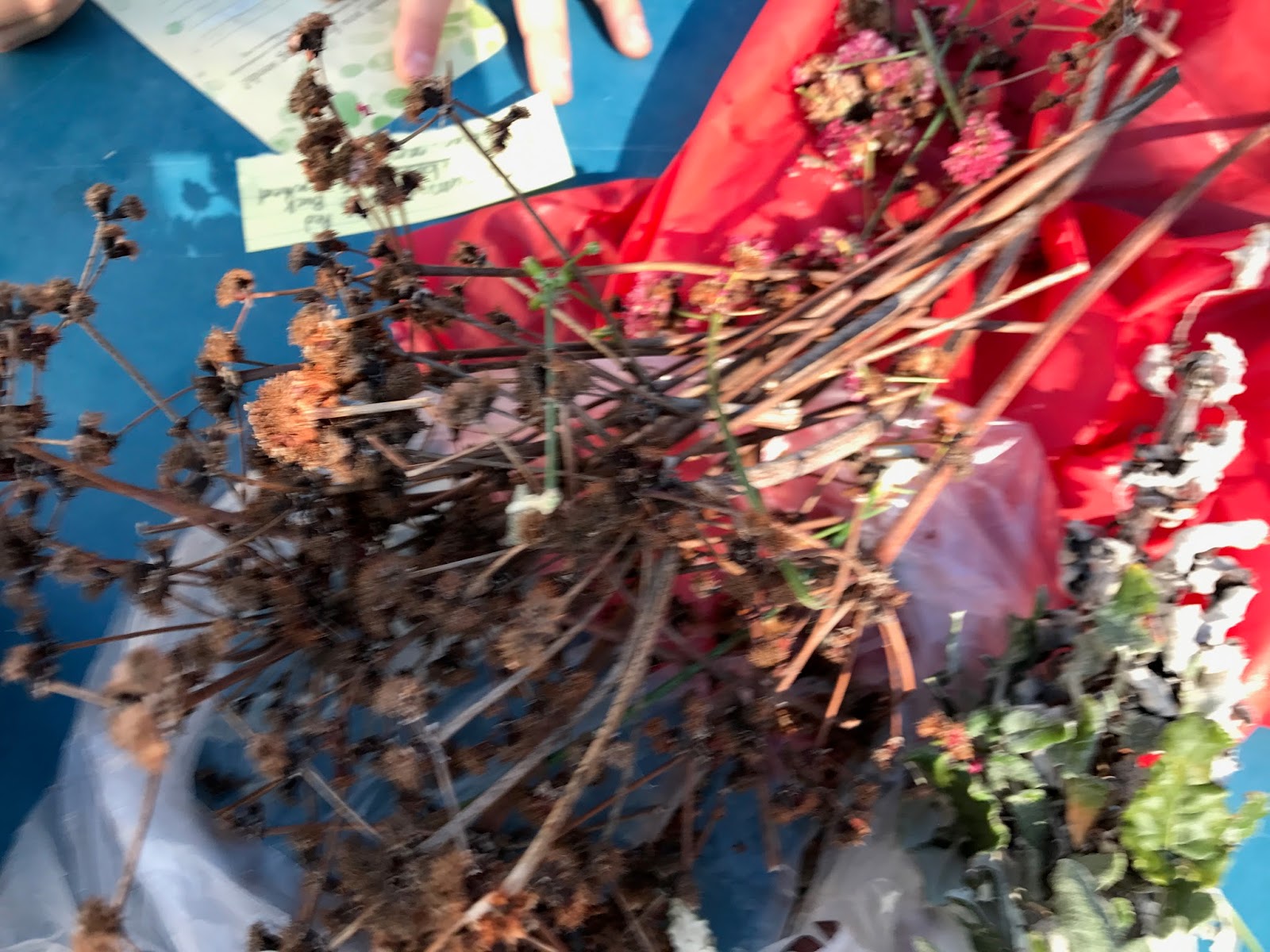
Today Ms. Conn's fifth graders saved seeds from several different plants. Using a screen donated to Marquez from Seed Savers Exchange, they sorted seeds from sunflowers, red buckwheat, milkweed and blanket flower. We discussed how the seeds are dispersed by wind and pollinators. In the case of the red buckwheat and blanket flower they saw several different stages of the flower and seeds. In the case of the milkweed they saw the milky white material that helps transport the seeds.
The students used the seed packets from Seed Savers Exchange to save the seeds. They wrote the common names and scientific names on the packets. They now should know that the scientific name is in Latin!
When all fifth graders have done this lesson, they'll each be able to take home a seed.
After the lesson, the students enjoyed a kale/mango/banana/apple juice smoothie. We discussed that these smoothies do not have preservatives, that they are made from fresh ingredients and less expensive than the ones you can purchase in the store.
The students used the seed packets from Seed Savers Exchange to save the seeds. They wrote the common names and scientific names on the packets. They now should know that the scientific name is in Latin!
When all fifth graders have done this lesson, they'll each be able to take home a seed.
After the lesson, the students enjoyed a kale/mango/banana/apple juice smoothie. We discussed that these smoothies do not have preservatives, that they are made from fresh ingredients and less expensive than the ones you can purchase in the store.
| Red buckwheat seeds |
| Sunflower seeds |
| Milkweed seeds |
Subscribe to:
Posts (Atom)