Saturday, February 27, 2016

Ms. Fein's and Ms. Yoshida's Students Plant in Egg Cartons

This week, the 2nd graders in Ms. Fein's and Ms. Yoshida's classes planted seeds in cardboard egg cartons and learned the concept of reusing.  The idea for this project came from the Whole Kids Foundation, which recently donated money to the edible garden. Here is the link for the project: https://www.wholekidsfoundation.org/downloads/hands-on/scrapkins-seed-starter.pdf.

The students took the egg cartons home. Directions for care follow the photos.


Directions for care include: keep moist by placing carton on a tray or plate and preferably watering from below. Once seedlings have 3 sets of leaves they can be placed in the garden; they should be "hardened off" by staying outside 1 or 2 hours for a few days; before planting, separate the six individual cells if desired and cut off the bottoms. Then wet thoroughly and plant in the garden or a pot, making sure that the cardboard is at or below soil level. If the cardboard is above the soil level it will wick away water from the soil surrounding the seedling. Eventually the cardboard will decompose.


Friday, February 26, 2016

Ms. Palo's and Ms. Gardner's Students Plant in the Native American Garden

Ms. Palo's students and Ms. Gardner's students planted in the Native American Garden today. They planted black sage and penstemon. The Chumash made tea from black sage and would soak their feet in it. The  Chumash used the local penstemon to heal their wounds. They made a poultice of the leaves and flowers and put it on wounds and insect bites.  We planted margarita bop penstemon which is adapted to our clay soil.

The students read the plant labels from Theodore Payne that give information on eventual size of the plant and amount of sun it takes. Some of the plants in the garden will do well in shade and others need sun.  These plants prefer sun. The students worked in teams to plant. They found out that clay soil is very hard. Native plants should be planted either level with the soil or a slight bit higher than the soil level. The roots will rot if planted too deep.

Each native plant that's planted will need two watering cans of water weekly for the first year. We are placing wooden markers by the plants so the watering teams can water them.

Planting penstemon


Wednesday, February 24, 2016

Ms. Bihari's Class Harvests Peas and Transplants Seedlings

Harvesting peas
Today Ms. Bihari's class harvested 30 sugar snap peas-enough peas for each child to have one. In addition they transplanted carrot, bean and nasturtium seedlings that they'd grown from seeds and cared for in their class. They also weeded and watered. They observed that some of the lettuce and spinach seeds that they'd planted a few weeks ago were growing!

Ms. Farrell's Class Makes Lettuce Wraps

Ms. Farrell's class had so much lettuce in their garden bed that they made lettuce wraps. Parents sent in additional produce (bell peppers, avocado, carrots, and lemons) and chicken.  They also added rice and salad dressing and then rolled the yumminess up with the lettuce!!


Tuesday, February 2, 2016

Thanks to Former Marquez Student, Piers Carmichael

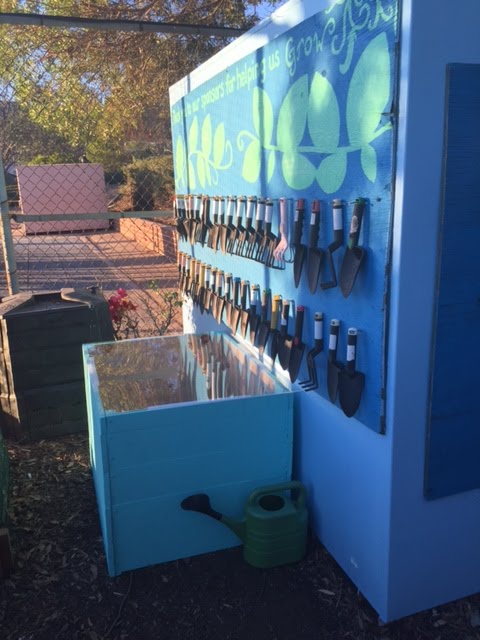
We have some new colorful furniture and teaching equipment in the edible garden courtesy of former student, Piers Carmichael, a boy scout who chose the garden for his Eagle Scout project. The cold-frame, next to the shed, will enable us to grow seeds outside for longer as it'll keep them warmer. The root view box will enable the students to see the roots grow. Finally, the newly painted table and chairs will be useful for teaching and fun for the kids to sit on.  They had been covered with peeling white paint. Thanks to the scouts from Troop 223 who worked on this project!

Our new cold frame


The root view box will be a good teaching aid.
The table and chairs will be fun to use and useful! 

Ms. Yoshida's Class and Ms. Connor's Class Make a Fruit and Vegetable ABC Book

On Feb. 1, Ms. Yoshida's students and Ms. Connor's students listed names of fruits and vegetables alphabetically. Mrs. Vander Veen wrote them on the chart. Then each child wrote the names of vegetables and fruits on a letter page that will go in the class Fruits and Vegetables Book.  They also illustrated their page. Mrs. Vander Veen showed them some vegetables from a vegetable abc book to supplement their ideas. We'll be bringing in some of the less common fruits and vegetables this season for them to taste!

The students also added the worm salad that they made in December to the worm bin and reviewed the meaning of rot and decomposition.

For fun, Mrs. Vander Veen offered the students homework of writing down the fruits and vegetables that they eat for this week. Those that complete the homework will get some veggies or a new pencil!

Students generated a list of fruits and vegetables
The Fruit and Vegetable ABCs
Investigating the worms!

Thursday, January 28, 2016

Ms. Bihari's Class Starts Seeds and Plants

On January 27, Ms. Bihari's 3rd graders planted. The first group planted seeds in seedling trays that they will monitor in their classroom. They planted two types of beans and nasturtiums. They will record when the seeds were planted, when they germinate and when they have two real sets of seeds so that they can be transplanted. We discussed that the nasturtiums will be able to be transplanted in the butterfly garden since pollinators like them. The children also planted some nasturtiums in the butterfly garden. We'll see which seeds germinate first!  We also looked at some carrot seedlings in the Peter Rabbit Garden and discussed that they were too close together. The students learned about thinning. We took out several seedlings and transplanted them in the seedling tray. We'll see if they grow!

The second half of the class planted in the class bed. First they removed the weeds carefully to avoid harming the sugar snap pea plants. They observed that there were six peas growing from their fall planting. Next the students planted seeds of lettuce and spinach as well as some seedlings of dianthus, also called pinks.

One student was the scribe and recorded what the students did today.

The next step is fertilizing the existing plants, supporting the peas with sticks or tomato cages and watering.